Can you change the colour of vinyl plank, laminate or hardwood floors?
It depends entirely on the material. Solid hardwood can be sanded to bare wood and re-stained a new colour, typically for $4 to $7 per square foot, and engineered hardwood can be too if its wear layer is thick enough (about 2mm or more). Vinyl plank and laminate cannot meaningfully change colour. Their look is a printed image under a clear wear layer, so there is nothing to sand, and paint or stain sits on a surface designed to repel it. Painted vinyl or laminate wears through at doorways and chair paths within months and usually voids the warranty. Tile can be painted or coated, but only as a short-term fix. If you dislike the colour of a vinyl or laminate floor, the honest options are to warm up the room around it, or to replace it, which often costs little more than a good hardwood refinish.
Floor by floor: what's actually possible
| Floor | Can the colour change? | How |
|---|---|---|
| Solid hardwood | Yes | Sand to bare wood, stain, recoat. $4–7/sq ft; about 3–5 days. |
| Engineered hardwood | Only with a thick wear layer | As solid hardwood if the veneer is about 2mm or more. Thin veneers can only be buffed and recoated, which changes sheen, not colour. |
| Vinyl plank (LVP, SPC, WPC) | No, not durably | The colour is a printed film under the wear layer. Paint needs a bonding primer, wears through in traffic and cracks at the click joints. |
| Laminate | No, not durably | Printed paper under a melamine wear layer. Paint barely adheres, and wet prep swells the plank edges. |
| Ceramic and porcelain tile | Partly | Tile paint or coatings are temporary on floors. Changing the grout colour with a grout colourant is durable and changes the look more than people expect. |
| Carpet | Darker only | Professional carpet dyeing can deepen or even out colour; it can't make carpet lighter. |



Why vinyl plank and laminate can't really be changed
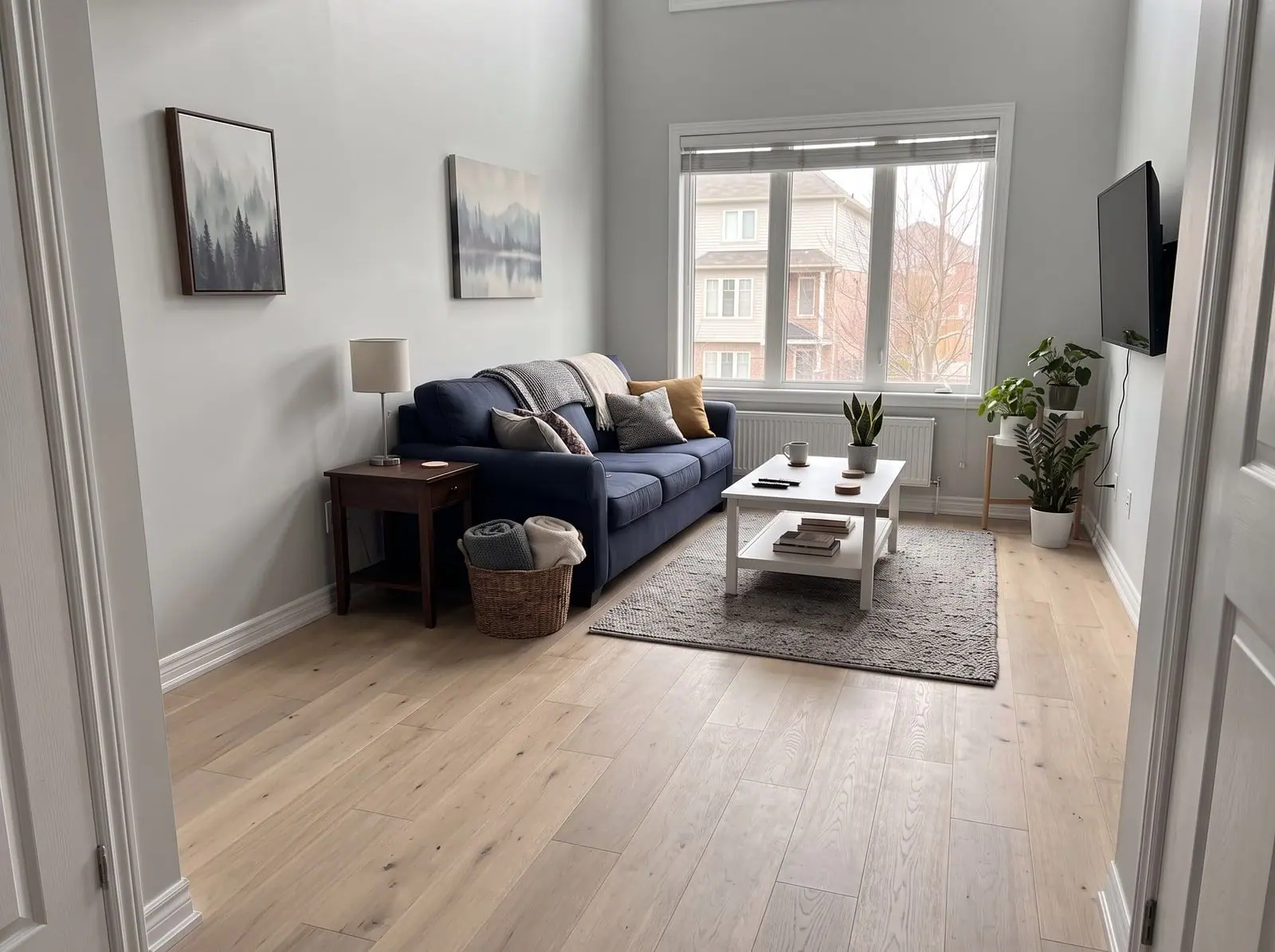
Vinyl plank and laminate look like wood because a high-resolution photograph of wood is printed onto a film or paper layer, then sealed under a hard, clear wear layer designed to resist scratches and stains, which is exactly why paint struggles to stick. Sanding through the wear layer destroys the print underneath. The DIY videos that show vinyl being painted or gel-stained look good on day one. In a real Canadian home, with boots, chair legs, grit and winter salt, the coating wears through first at doorways, in front of the sink and along walking paths, and the click joints flex enough to crack it at every seam. Manufacturers treat painting or coating as an alteration, which almost always voids the warranty.
Changing the colour of hardwood: what to expect
Refinishing is the one true colour change, and it can be dramatic: red oak can go from 1990s golden to a natural, brown or dark stain in a few days. Know the limits before you choose:
- Going darker is easy; going lighter is hard. Sanding removes the old finish, but red oak keeps a pinkish undertone and maple stays pale yellow. Truly light or "raw" looks sometimes need bleaching or a specialised finish system.
- Species matters. Maple and birch blotch with dark stains; oak takes stain evenly. Ask for test patches on your actual floor, since the same stain looks different on every species.
- The finish changes the colour too. Oil-based polyurethane ambers over time; water-based finishes stay closer to the stain colour.
- It's messy but contained: plan on 3–5 days, ventilation, and staying off the floor while it cures. See refinish or replace hardwood.
Stuck with grey vinyl or laminate? Make it work
If your grey floor is in good condition, you can take most of the chill out of it without replacing anything:
- Bring in warm wood: a dining table, side tables, open shelving or picture frames.
- Lay a large rug with warm tones (rust, camel, cream) over the biggest stretch of grey.
- Repaint cool grey walls in a warm white or soft greige. The floor will read noticeably warmer.
- Switch to 2700K bulbs, which warm every surface in the evening.
- Where grey floor meets honey oak stairs or trim, painting the trim white often solves the clash more cheaply than replacing the floor.
When replacing is the better answer
Replacing a vinyl or laminate floor usually costs less than people expect, and often little more than refinishing hardwood. In Ontario, vinyl plank typically runs $5–10 per square foot installed, laminate $4.5–9, and hardwood $9–18. See the vinyl plank, laminate and hardwood cost guides for every province. Many rigid-core vinyl products can also be installed over a single layer of existing flat, hard flooring, which saves removal cost; your installer will check flatness, door clearances and the manufacturer's rules. See subfloor preparation.
Whichever route you take, change colour only once: see the new floor in a photo of your room first, with the visualizer, and test real samples in your own light.
Common questions
01Can vinyl plank flooring be painted?
Technically yes, practically no. With heavy sanding, a bonding primer and floor paint it will take paint, but the finish wears through in walking paths and cracks at the click joints within months, you lose the wood look, and the warranty is almost always void. Replacing is usually the better use of money.
02Can you stain vinyl flooring darker?
No. Stain is designed to soak into wood fibres, and vinyl has none, while the wear layer is built to repel stains. Gel stains or tinted coatings sit on top of the surface and wear away like paint.
03Can you change the colour of laminate flooring?
Not durably. Laminate's colour is a printed layer under a melamine wear layer that paint barely bonds to, and wet preparation can swell the plank edges. Warming the room around it, or replacing it, are the realistic options.
04Can engineered hardwood be refinished a different colour?
Yes, if the wear layer is thick enough. A full sanding removes about 1mm, so a veneer of roughly 2mm or more can usually be sanded and re-stained at least once. Thinner veneers can only be buffed and recoated, which changes the sheen, not the colour.
05How much does it cost to change the colour of hardwood floors?
Sanding, staining and refinishing typically costs $4 to $7 per square foot in Canada, depending on the floor's condition, the species, and how many stain and finish coats are needed. That's roughly a third to half the cost of a new hardwood floor.
06How can I make grey floors look warmer?
Add warm wood furniture and a large warm-toned rug, repaint cool grey walls in a warm white or soft greige, and use 2700K bulbs. Painting clashing honey oak trim white also helps grey floors read cleaner and less cold.
Ask a local expert
Service areaAll of Canada — matched to an expert near you
HoursMonday – Friday · 8am – 6pm (local time)
Saturday · 9am – 4pm (local time)
Sunday · Closed · online requests 24/7
Related guides
How to see new flooring in your house before you buyHow to choose a flooring colourLight or dark floors? How to chooseWhat flooring goes with oak cabinets
Cost guides
Vinyl plank flooring cost in CanadaLaminate flooring cost in CanadaHardwood flooring cost in CanadaCarpet installation cost in CanadaTile flooring cost in Canada
The right floor changes how a room feels. The right installer changes how the whole project feels.Start a free quote