How do I choose the right flooring colour for my home?
Choose in this order: undertone, then lightness, then character. Undertone matters most. Look at what you're keeping (cabinets, trim, doors, stair treads, big furniture) and pick a floor whose undertone either matches it or deliberately contrasts with it. Then choose lightness: a floor two or three shades lighter or darker than your cabinets looks intentional, while one that is almost the same looks like a mistake. Finally, choose character (knots, grain and variation between planks) to suit how you live. More variation hides dust, crumbs and pet hair. For a colour that will still look current in ten years, a natural mid-tone oak with a neutral undertone is the safest choice. Test your shortlist in your own room and light before you order.
Start with what you're keeping
A floor is the one surface that touches everything else in the room, so it has to work with what isn't changing. Before looking at a single sample, list what stays:
- Kitchen cabinets and island
- Trim, baseboards and interior doors (white, or stained oak or pine?)
- Stair treads and railings
- Fireplace surround and countertops
- Large furniture you're not replacing: dining table, sofa, built-ins
Most Canadian homes built between the mid-1980s and mid-2000s have at least one strong wood tone in that list, usually honey oak cabinets, oak railings or pine doors. That wood sets the rules. If it's your kitchen, see what flooring goes with oak cabinets.

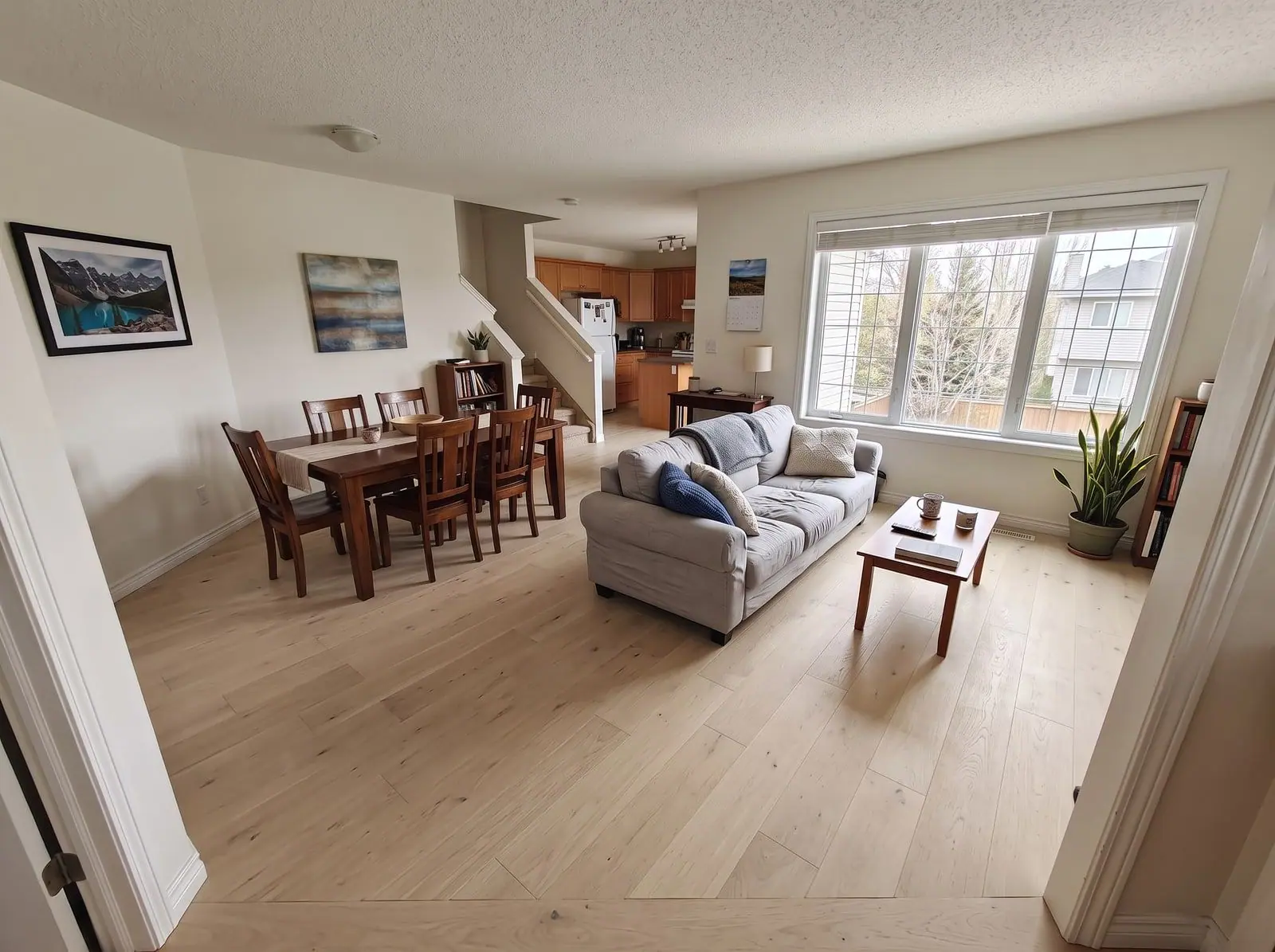
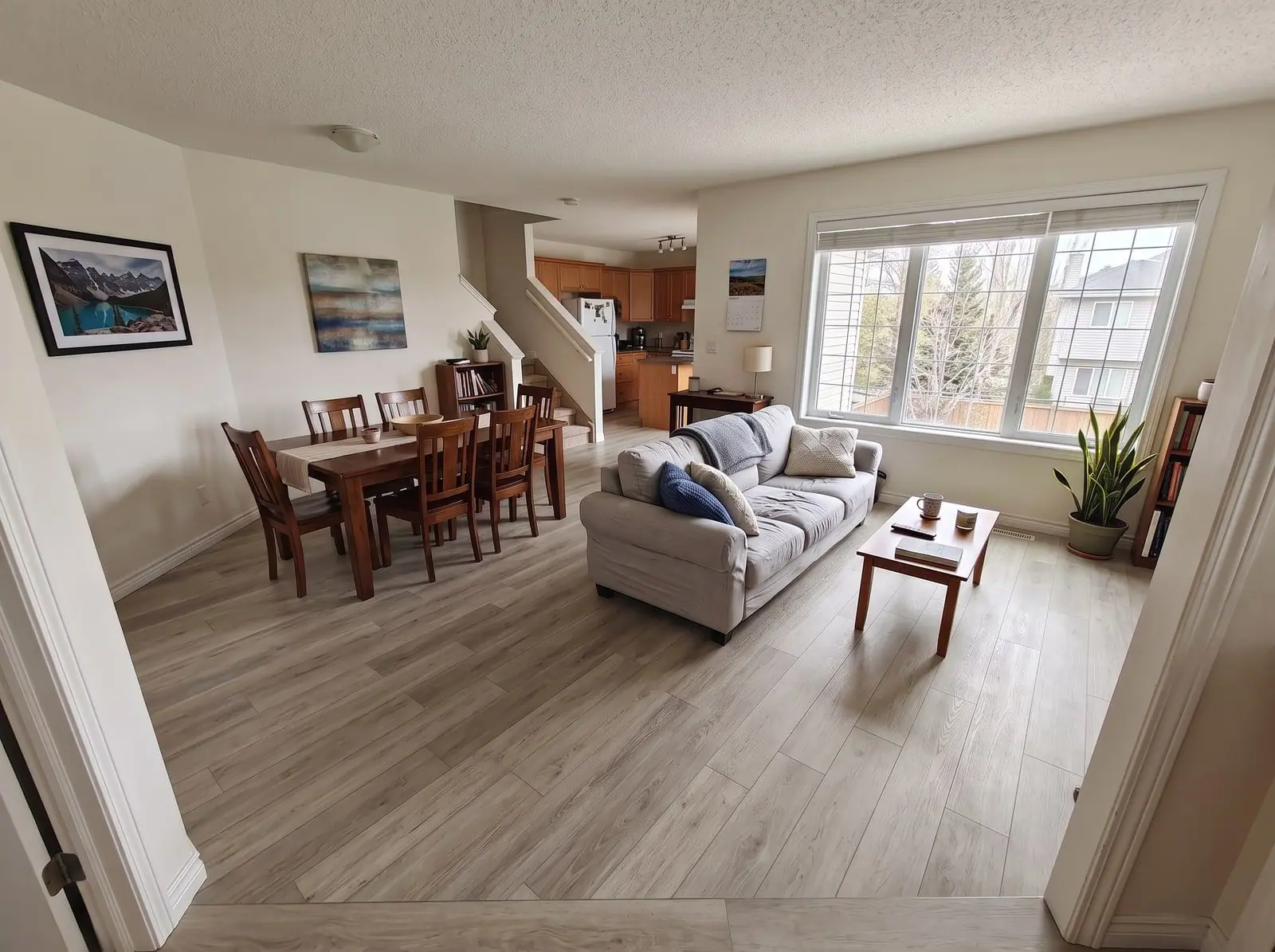


Undertone: the part most people skip
Every floor colour leans warm (yellow, orange or red), cool (grey or blue) or neutral. Undertone is what makes two "medium brown" floors look completely different next to the same cabinets.
- Warm floors (honey oak, golden maple, cherry) sit comfortably with cream trim, warm whites, brass and earthy colours. Next to other warm woods they can pile up into a lot of orange.
- Cool floors (grey, ash, grey-washed) suit crisp white trim, black hardware and cool paint. Next to honey oak they make the oak look brassier, which is the classic 2018 problem of grey vinyl meeting original oak stairs.
- Neutral floors (natural white oak, greige, balanced mid-browns) sit between the two, which is why they're the easiest to live with and the hardest to get wrong.
To see a sample's undertone, lay it on a sheet of white printer paper in daylight. The lean toward yellow, pink or grey becomes obvious in a way it never is on a store shelf.
Lightness: the two-to-three shade rule
Once the undertone works, choose how light or dark to go. The reliable rule is contrast with intent: a floor clearly lighter or darker than your cabinets and furniture, by about two or three shades, reads as a decision. A floor almost the same shade as the cabinets makes the room look monotone and the cabinets look older than they are. Floors are also usually at least a shade darker than the walls, which grounds a room. An all-light Scandinavian scheme is the deliberate exception. If you're torn between the extremes, our guide to light or dark floors covers what each one shows, how each handles Canadian winter light, and resale.
Character and finish
- Sheen: choose matte or low-sheen. It hides scratches, grit and footprints, and looks more like real wood. High gloss shows everything and reads dated.
- Grain and knots: a "character" or rustic grade hides wear and pet damage far better than a clean, knot-free grade, which looks modern but shows every speck of dust.
- Variation between planks: high variation looks natural in a large room but can feel busy in a small one or next to strongly grained cabinets.
- Plank width: wide planks (7 inches and up) read contemporary; narrow 2¼–3¼ inch strips read traditional, like the original floors of many pre-war Canadian homes.
What's current, and what's dating
Since the early 2020s, floor colours have moved decisively away from cool grey toward warmer, more natural wood tones. The looks with staying power are natural and light white oak, balanced greige that isn't too grey, and warm mid-browns. What dates a floor fastest is anything extreme: flat blue-grey, heavily grey-washed or whitewashed planks, near-black espresso (the 2008 look), orange-red stains, deep hand-scraped distressing and high gloss. Trends matter less than fit, though. A floor that suits your cabinets and light will outlast one chosen because it was popular the year you bought it.
Are grey floors out of style?
Cool, flat grey vinyl and laminate, the kind installed in thousands of Canadian homes and new builds between about 2016 and 2021, is the look that's dating fastest, especially next to warm wood trim or honey oak cabinets. Greige and grey with a warm undertone still look current. If you already have grey floors in good condition, you don't have to rip them out. Warm wood furniture, warm-toned rugs, a warmer wall colour and 2700K bulbs take a lot of the chill out. If you're wondering whether the floor itself can be changed, see can you change the colour of your floors.
Colour room by room
- Kitchens: mid-tones hide crumbs and water spots best. Contrast with the cabinets rather than matching them. See the best flooring for kitchens.
- Basements: go lighter and warmer than you think. Basements get little daylight, and light, warm floors keep them from feeling like basements. See the best flooring for basements.
- Entries and mudrooms: mottled mid-tones hide the white film of road salt and the grey of winter grit. Very dark and very light solid colours show both.
- Bedrooms: carpet in oatmeal, greige or warm grey hides lint and suits almost any bedding.
- Open-concept main floors: one continuous colour. Choose it for the largest area and the kitchen cabinets first. See flooring for open-concept main floors.
Choosing for resale
If you expect to sell within five years, a natural mid-tone oak or balanced greige has the broadest appeal to Canadian buyers. It photographs well in listings and lets a buyer imagine their own furniture. Very dark, very grey and very orange floors all narrow the pool of buyers who love the house on sight.
Common questions
01What colour flooring goes with everything?
A natural mid-tone oak with a neutral undertone: not orange, not grey. It sits comfortably with white or wood trim, most cabinet colours and both warm and cool paint, and it hides everyday dirt better than very light or very dark floors.
02What is the most popular flooring colour in Canada?
Natural and warm oak tones in light to mid shades, along with balanced greige, are the most requested looks in Canadian renovations today. Cool grey, which dominated from about 2016 to 2021, has fallen out of favour.
03Should floors be lighter or darker than cabinets?
Either, as long as the difference is clear, about two or three shades. Floors that nearly match the cabinets make a kitchen look monotone and dated. Light cabinets pair well with mid or dark floors; wood cabinets usually look best with a floor that is clearly lighter and cooler, or clearly darker.
04Is grey flooring a good idea in 2026?
Cool, flat grey is dating quickly and clashes with warm wood trim. If you like grey, choose a greige or a grey with a warm undertone and natural-looking grain, and check it against your trim and cabinets in your own light before ordering.
05How do I choose a vinyl plank colour?
The same way as any floor: undertone first, then lightness, then character. For vinyl specifically, choose a matte finish, look for embossed texture that follows the printed grain, and ask how many unique plank visuals the product has, so the pattern doesn't visibly repeat across a large room.
Ask a local expert
Service areaAll of Canada — matched to an expert near you
HoursMonday – Friday · 8am – 6pm (local time)
Saturday · 9am – 4pm (local time)
Sunday · Closed · online requests 24/7
Related guides
How to see new flooring in your house before you buyLight or dark floors? How to chooseWhat flooring goes with oak cabinetsCan you change the colour of your floors?
Cost guides
Vinyl plank flooring cost in CanadaLaminate flooring cost in CanadaHardwood flooring cost in CanadaCarpet installation cost in CanadaTile flooring cost in Canada
The right floor changes how a room feels. The right installer changes how the whole project feels.Start a free quote