Is it better to have the same flooring throughout the house?
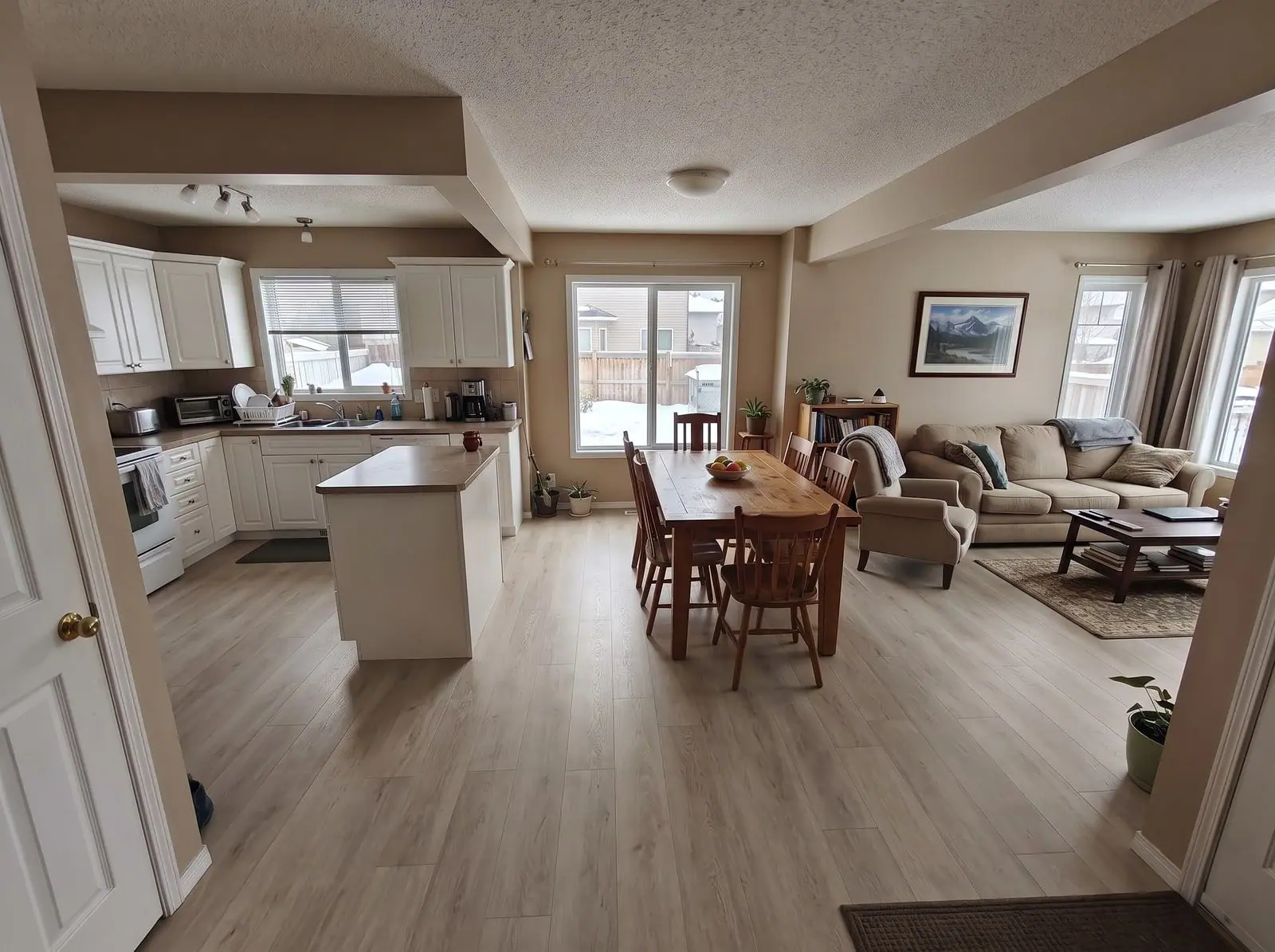
For most Canadian homes, yes: one continuous floor through each level looks bigger, calmer and more expensive, removes transition strips that trip people and collect dirt, and usually costs less because you buy in bulk and install faster. The best practice is one floor per level, changing only where a room has a real reason to be different. Bathrooms need something fully waterproof: tile, or the same rigid-core vinyl if it's rated for full baths. Entries that take winter salt and slush can justify a tile landing. Bedrooms can switch to carpet for warmth and quiet. Basements often want a different, waterproof product. The main drawback is that a mistake is house-wide, so test the colour in several rooms and lights before you commit.



Pros and cons
| One floor throughout | Different floors by room |
|---|---|
| Rooms read larger and connected; sightlines run uninterrupted | Each room can have the ideal material for its job |
| No transition strips to trip on, loosen or collect crumbs | Transitions at every change, each needing height planning |
| Bulk pricing, less waste, faster installation | More small orders, more cuts, more trim |
| Looks more expensive and helps resale | Can look pieced together, especially in open plans |
| A colour mistake shows everywhere | A mistake is limited to one room |
| One product must cope with kitchen spills, entry grit and bedroom comfort | No compromises between rooms |
Where one floor works best
Living, dining, kitchen, hallways and the stairs connecting them are where continuity pays off most, particularly in open-concept main floors, where three materials in one sightline is the thing buyers most often call dated. Modern rigid-core vinyl and engineered hardwood can both run safely through a kitchen, which is what makes a single main-floor surface practical. See flooring for open-concept main floors for the details on continuous runs.
Where to change on purpose
- Bathrooms: tile is the classic choice. Rigid-core vinyl can continue into a bathroom if the manufacturer rates it for full bathrooms, with sealed perimeters around the tub, shower and toilet. Laminate and hardwood shouldn't go into full bathrooms.
- Entries and mudrooms: in a Canadian winter, a tiled landing inside the door catches salt, sand and slush before it reaches the rest of the floor. A large mat is the lighter-touch alternative if you want perfect continuity.
- Bedrooms: carpet upstairs or in bedrooms is warmer underfoot and quieter, and it's a natural break at the bedroom door. Many homes keep the main floor hard and the bedrooms soft.
- Basements: below-grade concrete wants a waterproof product with the right underlay. See the best flooring for basements. Matching the main floor's look is nice but not necessary.
Upstairs and downstairs
Floors on different levels don't have to match, because you never see them at the same time. What should connect is the stairs. Treads that match or deliberately contrast with the landing floor tie the levels together. A common, good-looking pattern in Canadian two-storeys is wood or vinyl on the main floor and stairs, and carpet in the upstairs bedrooms with the same hard floor in the upstairs hallway. See the best flooring for stairs.
If you do change material, change it well
- Change at a doorway or another natural break, never mid-room.
- Plan the heights so the surfaces meet flush or with a low-profile transition. Tile on membrane and thinset is often 10–15mm taller than floating vinyl.
- Keep the tones related: a tile that shares the undertone of the wood or vinyl looks planned; a clash looks accidental.
- Keep the plank direction consistent where the floors return. See which way to lay flooring.
Choosing one floor for everything
A floor that runs through the whole level has to handle the hardest room it passes through, usually the kitchen or the back entry. That's why waterproof rigid-core vinyl and well-finished engineered hardwood are the usual whole-level choices, and why a mid-tone, matte, lightly grained look is safest: it hides crumbs in the kitchen, grit by the door and dust in the living room. Because a whole-level floor is a big commitment, see it in several of your rooms before ordering: in a photo with the visualizer, then with real planks in each room's light.
Common questions
01Is it better to have the same flooring throughout the house?
For each level, usually yes. One continuous floor makes the home look larger and more cohesive, removes transitions and often costs less. Change material only where a room needs it, typically bathrooms, a salty entry, bedrooms if you want carpet, and the basement.
02Can you put the same flooring in bathrooms?
With rigid-core vinyl rated for full bathrooms, yes, with the perimeter sealed around the tub, shower and toilet. Laminate and hardwood should stop at the bathroom door; tile is the traditional choice there.
03What are the pros and cons of the same flooring throughout the house?
Pros: a bigger, calmer look, no transition strips, bulk pricing and better resale appeal. Cons: one product has to suit every room, and a colour mistake shows everywhere, so test samples in several rooms before committing.
04Should bedrooms have the same flooring as the living room?
They can, and it looks seamless. Many Canadian homes switch to carpet in bedrooms for warmth and quiet, changing at the bedroom door. Either is a good choice; what looks wrong is a different hard floor in every bedroom.
05Should upstairs and downstairs flooring match?
Not necessarily, since you don't see both at once. Make the stairs the link: treads that match or deliberately contrast with the floor at the top and bottom tie the levels together.
Ask a local expert
Service areaAll of Canada — matched to an expert near you
HoursMonday – Friday · 8am – 6pm (local time)
Saturday · 9am – 4pm (local time)
Sunday · Closed · online requests 24/7
Related guides
How to see new flooring in your house before you buyHow to choose a flooring colourLight or dark floors? How to chooseWhat flooring goes with oak cabinets
Cost guides
Vinyl plank flooring cost in CanadaLaminate flooring cost in CanadaHardwood flooring cost in CanadaCarpet installation cost in CanadaTile flooring cost in Canada
The right floor changes how a room feels. The right installer changes how the whole project feels.Start a free quote